
As part of our ongoing series on climate and heritage, we spoke with Moses Jenkins, project manager at Historic Environment Scotland. He is an expert in the retrofit of historic buildings, making them more energy efficient and brickwork.
Could you introduce yourself and tell us in what way you are involved in the topic of climate change and heritage?
My name is Moses Jenkins and I work for Historic Environment Scotland (referred to as HES). I specialize in brickwork, which is somewhat overlooked in Scotland, where most building are built of stone. HES is a large organization, responsible for a lot of different things. We’ve got quit some properties in care, including industrial sites, a few palaces, ruins, stone circles and big castles such as Stirling and Edinburgh. The organization is also responsible for looking after the ‘Listed Buildings’ and developing policies around them.
My work focuses on traditionally constructed buildings (built before 1919) and the practice of retrofit, maintenance and how we can ensure the buildings will be still there in 100 years. This is important because they represent our Scottish heritage.
In what way do you already experience the impact of climate change on heritage (in your work)?
When I started working at HES, nobody was thinking about climate change. Nor were energy efficiency or retrofit. Insulating buildings was not our priority The focus was mainly on traditional materials such as lime, stone, timber, and slate. That was our area of research and expertise.
Since then, it has changed markedly. Now almost all my work is on energy efficiency. There’s been a real change in focus, which started around 2008. This was quite early, especially for heritage in Scotland. For heritage this was groundbreaking. Same goes for the effects of climate change on buildings. It has become more evident in the last ten years or so. Buildings are getting wetter, they are harder to dry out, sandstone and brick remain saturated for longer periods of time. Normally, the stone gets wet, the sun comes and the stone dries, and that’s fine. But now, it often becomes wet again before it has fully dried. A continuously wet wall is not good for the conservation of the construction and the timber/wooden parts inside.
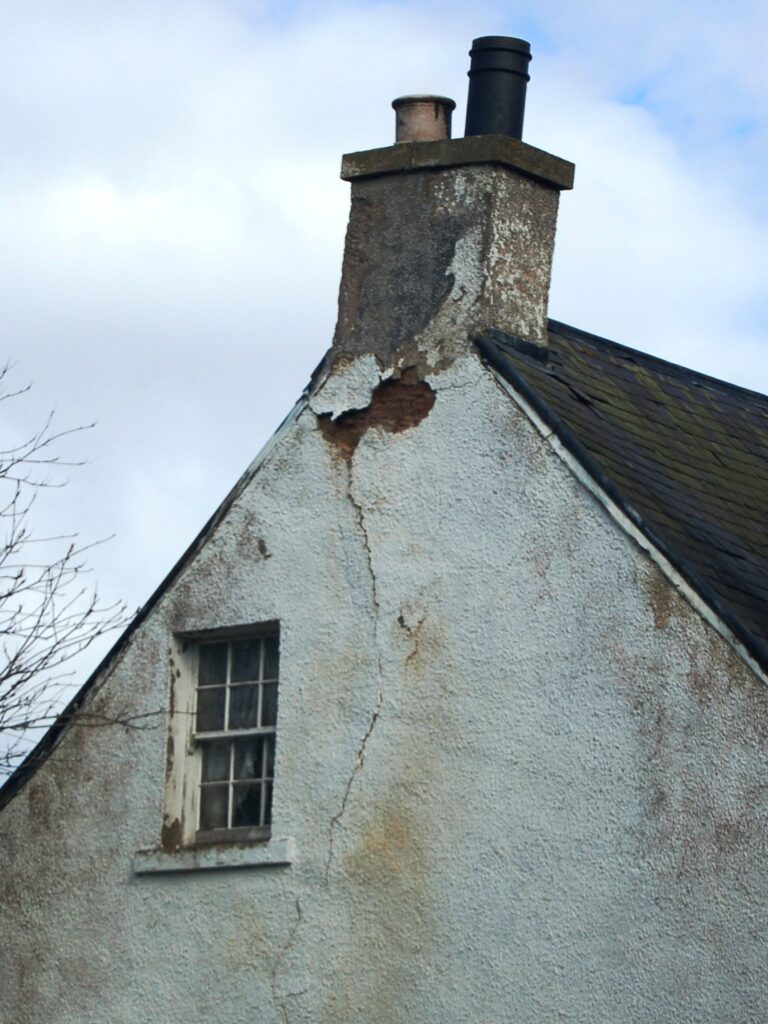
Another thing we are seeing are extreme weather events; more storms taking slates off roofs or chimneys getting blown down. A lack of maintenance exacerbates these issues. During storms, poorly maintained elements can even fall into the street. Climate change is accelerating these problems. Because of this, there is now a strong focus on adapting buildings to climate change. This includes installing larger gutters, bigger downpipes, and improved surface drainage. Overall, climate change has significantly shifted the focus of our work.
During storms, poorly maintained elements can even fall into the street. Climate change is accelerating these problems.
What should be done to limit the possible damage of climate change on heritage?
Repairing and maintaining buildings on a regular basis is the most important thing we can do to mitigate for climate change. For example, simply cleaning out gutters can make a huge difference. If you don’t clean out your gutter for 20 years and it’s full of leaves and grass, and it’s hanging off the edge of the building and the down pipe is blocked and the drains blocked, then the building will get soaking wet. So, clean out the gutters! I mean. I know it’s such a boring thing to do, but it is the single most important thing you can do.
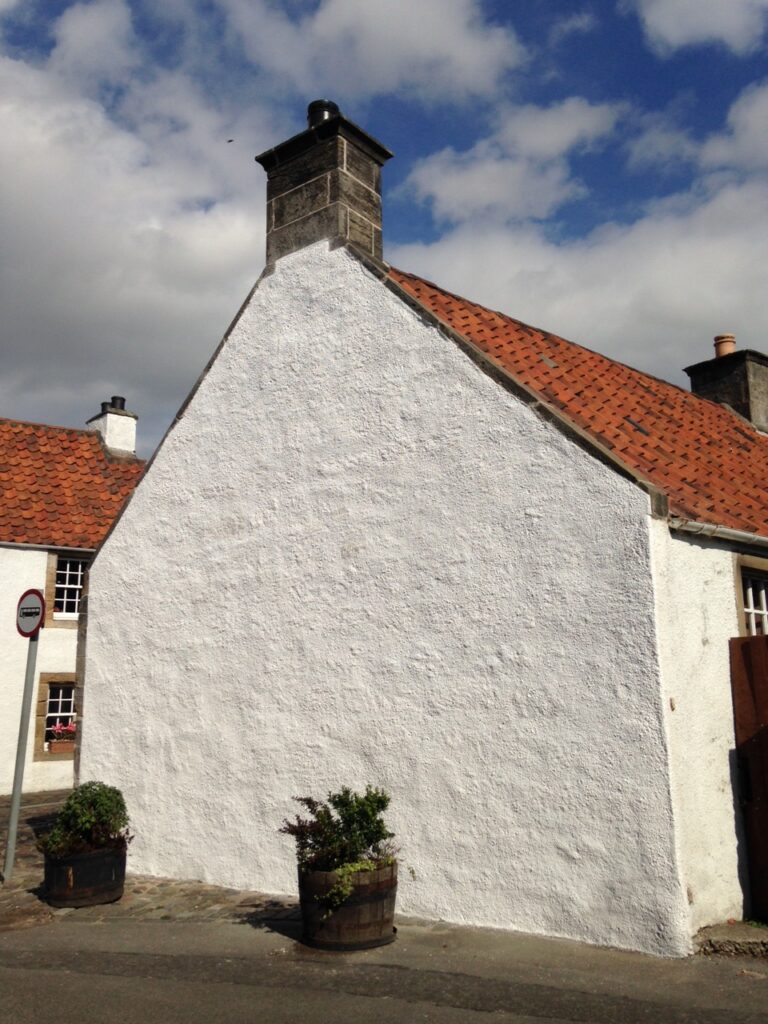
We also need to look at external lime coatings. At lot of historic buildings used to have an external lime render. We call it harling in Scotland; a coarse blend of local sand and lime, dashed onto the surface of the building. Often, this would have then been painted with a limewash. In the nineteenth century the fashion developed to hack the render off and show the stone/brickwork underneath, but it left the stone exposed.
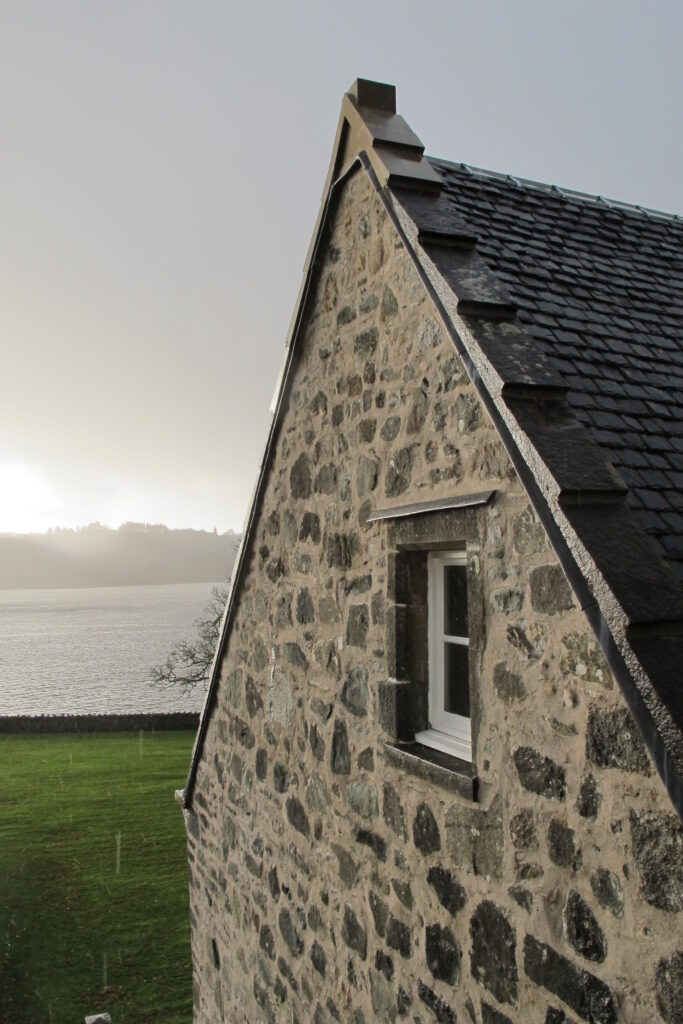
So, we need to look much more to putting external lime coatings on buildings. This layer can act sacrificially, buffer the moisture and protect the stone and brick underneath. Same goes for lead coverings for crow step gables, to prevent water from infiltrating. There is quite some debate if it is a good thing, because it changes the appearance of the building. That’s just something we will need to accept, that buildings will maybe look a bit different because we need to keep the water out. And if we don’t keep the water out, the building won’t be fit for purpose anymore.
If the question is whether we keep the small gutter and let the building get soaking wet or put a bigger gutter a prevent a lot of problems for happening, the solution is obvious for me. Ultimately, keeping water out is essential.
There is quite some debate if it is a good thing, because it changes the appearance of the building. That’s just something we will need to accept, that buildings will maybe look a bit different because we need to keep the water out.
Do you see a role for heritage in climate adaptation or climate mitigation?
Very much so, when we started 20 years ago discussing retrofit of historic buildings, we thought this was going to be bad for heritage and perceived it as a real threat. There was a fear that it would mark the end of traditional buildings. But now we are at a point where people are interested in traditional materials as being low carbon and local. A century ago, if you wanted stone, there would be hundreds of quarries in Scotland to choose from. Today they are almost all closed. Things shifted and now the first slate quarry is going to opened again, as a local alternative, driven by low carbon considerations.
Historic buildings serve as a source of information and inspiration about circular building. So yes, there’s definitely a feeling that traditional buildings and traditional materials are part of the solution, which is really good. This is a significant change from15 years ago.
There’s definitely a feeling that traditional buildings and traditional materials are part of the solution
What are your expectations for the impact of climate change on Scottish heritage in the future?
I expect the effect of climate change on Scottish heritage will be mixed. So on the negative side, we will face increasing challenges. We will be forced to deal with more storms and coastal erosion. Thit can result in the loss of some heritage sites. This will require difficult decisions to be made. How much resources do you put in to protect one site at the expense of others?
How much resources do you put in to protect one site at the expense of others?
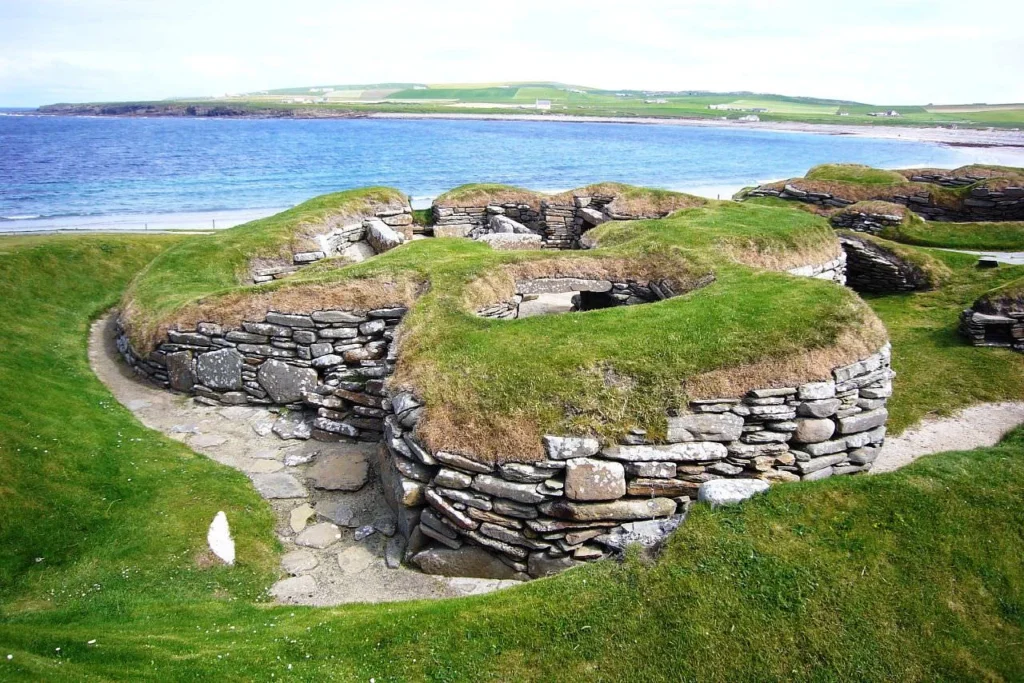
With the amount of damage storms can cause, we can also find other heritage sites. A good example is Skara Brae, up in Orkney. It is an archaeological site, from the Neolithic age, right by the sea. It was discovered because a big storm blew all the sand away. But this site is now also at risk.
Overheating will be a challenge as well going forward. It’s strange, because if you had told me 20 years ago that overheating would be a concern in Scotland, I would have laughed. Yet we have seen that some parts of Scotland are prone to overheating. So, one of the things I am looking at now is how to make buildings more energy efficient whilst simultaneously prevent overheating. Historical buildings are quite good in the prevention of overheating. Big windows, thick, mass masonry walls that act as thermal buffers. This is an opportunity to show that these buildings are worth keeping around.
Is there anything else you would like to add?
We need to try to mitigate the harms and exploit the positives of climate change. It is like there is a big wave coming and you can slam into it and be swept away, or you can try to ride the wave and have some fun along the way.
It is like there is a big wave coming and you can slam into it and be swept away, or you can try to ride the wave and have some fun along the way.